
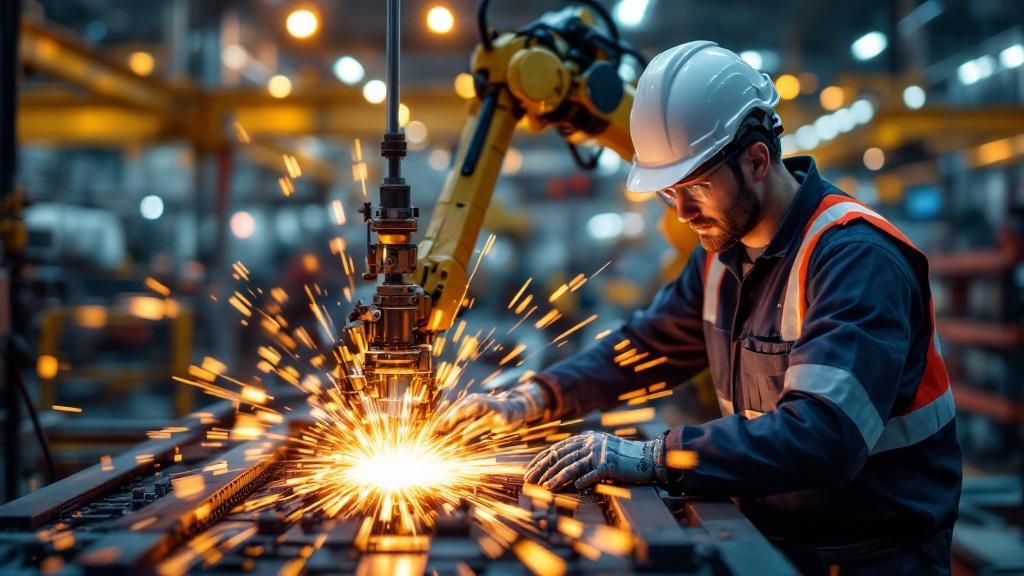
The UK manufacturing industry is undergoing an unprecedented transformation as business leaders allocate significant funding in next-generation automation solutions and broad-based employee development schemes. This pivotal change reflects manufacturers’ commitment to boost operational efficiency, maintain their competitive edge, and safeguard long-term viability. Our research demonstrates the significant capital investments driving this manufacturing transformation, examines the cutting-edge solutions transforming factory floors, and investigates how businesses are preparing their workforce for emerging challenges. Discover what this funding momentum means for British manufacturing’s trajectory.
Investment Surge in Automated Systems
The UK manufacturing industry has seen an extraordinary financial commitment towards automation solutions, with spending hitting unprecedented levels in the past few years. Key manufacturing firms across the automotive, aerospace, and electronics industries are committing significant funds towards automation robots, AI technology, and cutting-edge production methods. This investment surge indicates manufacturer confidence in automation’s capacity to enhance operational efficiency, reduce production costs, and elevate product quality standards. The scale of this commitment emphasises producers’ understanding that technological innovation is crucial for sustaining competitive edge in an ever more globalised marketplace.
Industry specialists link this investment momentum to multiple interconnected factors, such as post-pandemic distribution network evaluation, increasing employment expenditure, and the critical requirement for greater manufacturing agility. Companies are focusing on automation technologies that provide adaptability and growth capacity, allowing quick response to shifting market needs. Investment statistics show that manufacturers are not merely replacing manual procedures but radically transforming production methodologies. This strategic approach ensures that British manufacturing remains at the forefront of industrial innovation, positioning the sector for enduring development and improved durability against forthcoming financial volatility.
Strategic Human Capital Initiatives
Understanding that technological advancement alone cannot drive success, UK manufacturers are investing substantially in comprehensive workforce development programmes. These initiatives constitute a fundamental shift in how the industry invests in human capital. By pairing automation deployment with comprehensive training programmes, manufacturers are ensuring their workforce can successfully run, service, and enhance new technologies. This integrated methodology addresses skills gaps whilst enhancing worker confidence and involvement in an progressively technology-driven environment.
Vocational Training Courses
Leading manufacturers have established bespoke training academies and apprenticeship programmes created to furnish workers with vital technical and digital capabilities. These programmes cover robotics management, data analytics, cyber security protection, and sophisticated coding languages. Resources allocated to tutor-delivered and web-based training systems guarantees access to all employee tiers. Companies are collaborating with learning organisations to provide qualifications accepted throughout the sector, boosting advancement prospects and staff retention levels considerably.
The financial commitment to professional training goes further than first-stage induction, with organisations deploying ongoing capability enhancement initiatives. Workers receive regular upskilling prospects to keep pace with advancing digital landscapes and new sector standards. Many employers offer training subsidies, mentoring schemes, and sabbatical leave for additional study. This continuous dedication showcases organisations’ focus on developing sustained professional routes and fostering a ethos of ongoing education throughout their organisations.
Partnership with Academic Organisations
UK producers are forging strategic partnerships with universities and further education colleges to align curriculum development with industry requirements. These partnerships ensure graduates possess hands-on abilities immediately applicable to contemporary production settings. Joint ventures include course development, visiting lectures, lab facilities, and resource supply. By engaging directly with educational institutions, manufacturers influence the pipeline of talent entering the sector, tackling foreseen capability gaps in advance.
Additionally, manufacturers sponsor research initiatives and technology hubs within higher education institutions, fostering knowledge sharing and technological development. Double-degree programmes and industry placements provide students with crucial practical experience whilst giving companies early access to emerging talent. These working relationships reinforce the UK’s status as a international manufacturing leader, ensuring long-term competitiveness and positioning Britain as an desirable location for cutting-edge manufacturing investment and skilled workforce development.
Economic Impact and Prospects Ahead
The record funding for automation and employee development is expected to deliver significant economic benefits across the UK manufacturing sector. Market experts forecast productivity gains of up to 25% in the coming three years, resulting in higher production and improved competitiveness in worldwide markets. These improvements are expected to create approximately 15,000 new skilled manufacturing positions whilst reinforcing Britain’s role as a tech-focused industrial centre. The broader economic effect of this investment will likely encourage development throughout distribution networks and allied industries.
Long-term prospects for UK manufacturing appear decidedly encouraging as businesses establish themselves at the forefront of Industry 4.0 adoption. Companies committing to automation today are setting themselves up to unlock new market possibilities and adapt rapidly to changing customer needs. The incorporation of artificial intelligence, robotics, and sophisticated data analysis promises to release creative capacity historically restricted by labour availability and practical restrictions. Progressive manufacturers recognise that enduring market position depends upon relentless innovation progress and staff capability building.
Looking forward, the drive created through current investment trends points to a significant restructuring of British manufacturing’s economic contribution. State backing through skills funding and business incentives will likely speed up adoption across SMEs. As automation develops and workforce skills grow, British manufacturers are set to reclaim market share from global rivals. This shift constitutes not merely industrial modernisation but a strategic realignment of manufacturing as a cornerstone of the UK’s future economic prosperity and technological advancement.
